Millview Funding hands the request on to funding partners, and they decide the advance, the rate and the terms.
Inventory financing pays for goods before they earn money. This page covers a landscaping crew buying materials ahead of hardscape jobs, a shop ordering stock, an online seller restocking, a purchase order example for a wholesaler and how a borrowing base works for a hardware store.
At a glance
- Retail trade, ZIP 33034
92 employer establishments (ZBP 2023)
- Electronic shopping and mail-order, Miami-Dade County, FL
1,031 employer establishments (CBP 2023)
- Wholesale trade, Miami-Dade County, FL
8,354 employer establishments (CBP 2023)
An inventory financing example for a Florida City, FL landscaping crew
Inventory financing is not only for stores. Illustration only, invented figures: a landscaping crew in Florida City, FL signs three hardscape jobs and needs $26,000 of pavers, edging and irrigation parts on site before the first customer pays. A partner finances the materials for 90 days at an annual rate of 16%, so carrying them costs about $1,025.75 in interest if the balance is cleared on day 90.
The math only works if the jobs pay inside that window. If one customer pays late, the interest keeps running on the share of materials that job used, so a crew should line up the financing term with the payment dates written into its contracts. A home builder buying trusses and windows ahead of a homeowner's draw faces the same timing question with larger numbers.
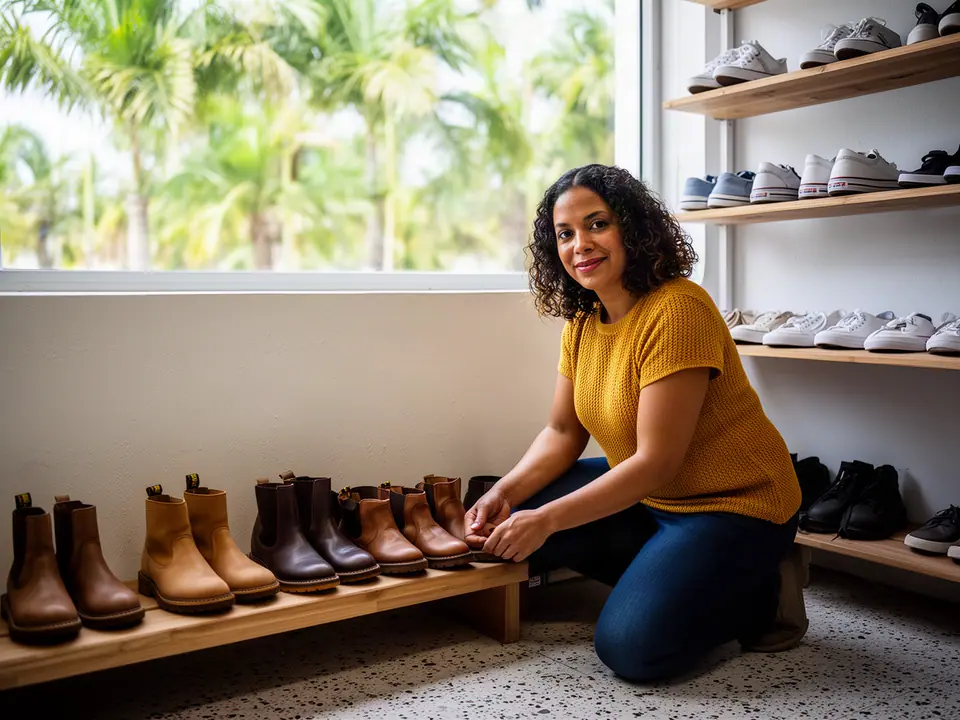
What inventory financing means for a Florida City, FL shoe and apparel shop
Inventory financing is money borrowed to buy goods the business will sell, with those goods serving as the collateral. A shoe and apparel shop orders sizes and styles months before they sell; the partner pays the supplier, and the shop pays the partner back as the stock moves off the shelves.
Because the stock secures the debt, the partner cares about what it would be worth if the shop could not pay: current-season goods in common sizes hold value, while slow or dated items count for less. Retail trade led every sector by employer count in ZIP 33034, with 92 establishments in 2023 (ZIP Code Business Patterns, NAICS 44-45); the ZIP reaches beyond the city limits, so that count is not a Florida City figure.
Inventory financing for ecommerce: a Florida City, FL online seller stocking up
An online seller has inventory that sits in a garage, a rented unit or a third-party warehouse, and its sales arrive through marketplace payouts rather than a register. Partners that fund ecommerce stock can look at those payout reports, the sell-through rate of past orders and the landed cost of the new shipment.
Online selling in Miami-Dade County, FL is mostly a small-staff business: 856 of the 1,031 electronic shopping and mail-order houses with paid employees had fewer than five employees in 2023 (County Business Patterns, NAICS 454110). For a seller that small, one large reorder can tie up more cash than the business holds, which is where a short inventory loan paid back from payouts can fit.
A purchase order financing example for a Miami-Dade County, FL wholesaler
Purchase order financing pays a supplier so the business can fill a confirmed order it could not otherwise afford to fill. Illustration only, invented figures: a Miami-Dade County, FL food-service wholesaler receives a $60,000 purchase order from a restaurant group. The goods cost $38,000 from its supplier. A partner pays the supplier directly, the wholesaler delivers, and when the restaurant group pays, the partner is paid first.
The wholesaler's gross margin on the order is $22,000, and every charge the partner adds comes out of that figure, so the deal is worth doing only if enough is left after those charges. Wholesale trade counted 8,354 county establishments with paid employees in 2023 (County Business Patterns, NAICS 42). The ZIP Code release lists 19 wholesalers in ZIP 33034, a postal area that crosses into Monroe County.
How does inventory financing work for a Miami-Dade County, FL hardware store?
In a revolving inventory arrangement, the partner sets a borrowing base: a percentage of the eligible stock the store holds. Eligible stock leaves out items that are damaged, obsolete or already promised to someone else. As the store buys more, the base grows; as it sells down, the store pays the balance back.
Illustration only, invented figures: a hardware store holds $80,000 of eligible stock at cost. If a partner advances 50% of that figure, the draw limit for the store is $40,000. The partner may ask for monthly inventory reports and visit the floor to count stock against them, so a store that already keeps clean records starts ahead.
Choosing among inventory financing companies as a Miami-Dade County, FL parts retailer
A parts retailer comparing inventory financing companies should put the offers side by side on the points that change the real cost, not only the headline rate:
- What share of stock value the company will advance, and which items it excludes.
- How interest and any other charges are calculated, and how often.
- Reporting duties: monthly counts, aging reports or field audits.
- What happens when stock ages past a set number of days.
- Whether the agreement also places a lien on other business assets.
A request through Millview Funding reaches funding partners that each answer those questions in their own way. Home builders and landscapers can ask the same questions about materials financing, since the terms work in much the same way. A shop owner can see what the request form asks, and which records come later, on the apply page. Shelf stock at a gas station store is one of the trade notes on the industries page.
By Millview Funding · Updated